
Launching a sportsbook is no longer just about getting a platform online. The real decision starts much earlier: should you build a custom sportsbook or choose a white-label solution? Both options can help you enter the market, but they serve different business goals, budgets, and growth plans.
Many businesses compare these two approaches because they want to avoid expensive mistakes. A platform that works well for one company may become a limitation for another. The right choice depends on how much control you want, how quickly you want to launch, and where you see your business in the next few years. Working with the right betting software provider can also make this decision much easier by helping you understand the strengths and trade-offs of each option.
This guide explains the differences between custom sportsbooks and white-label platforms, the advantages and disadvantages of each, and the situations where one option makes more sense than the other.
What Is a Custom Sportsbook?
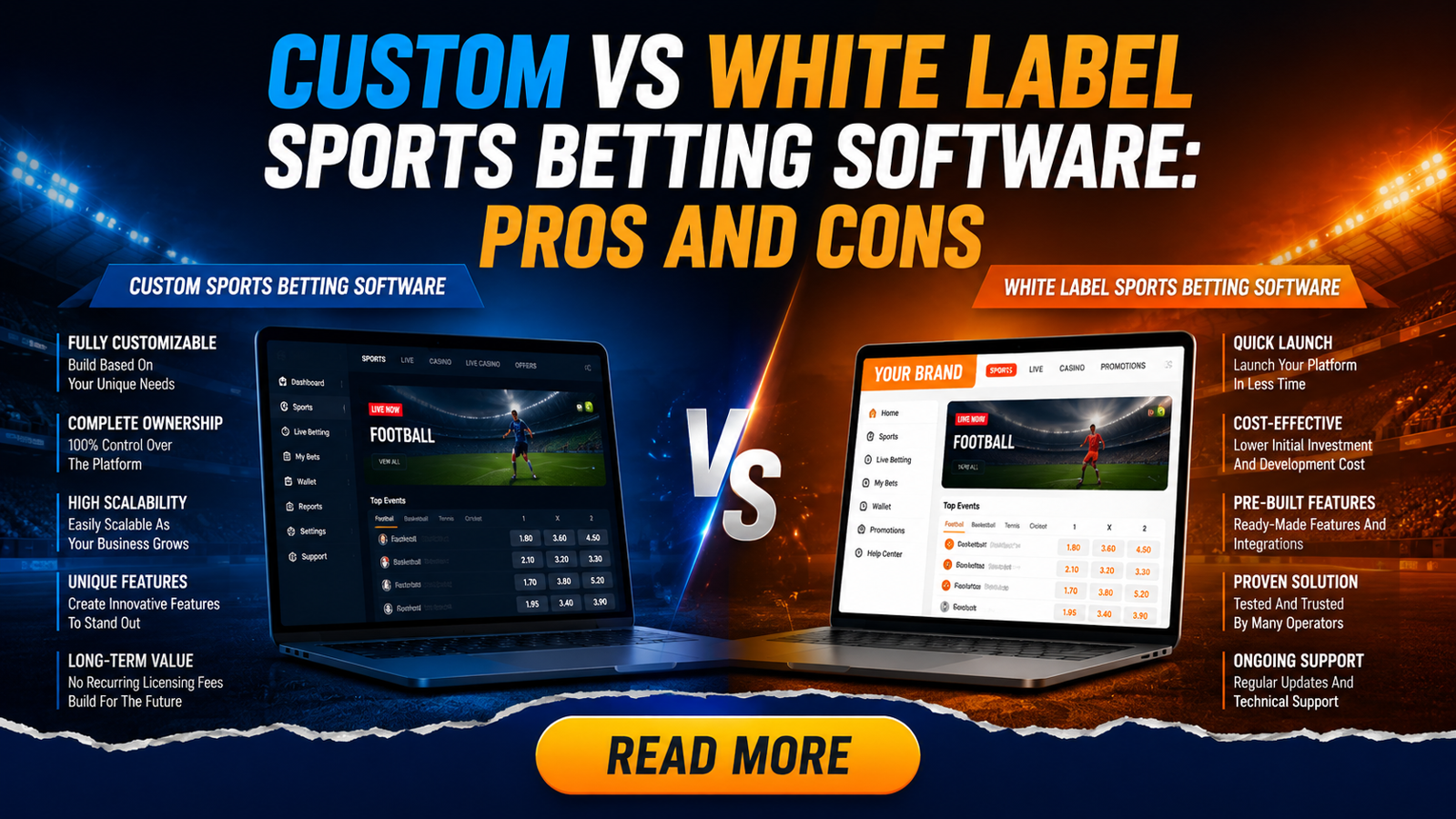
A custom sportsbook is a platform developed specifically for your business. Instead of using a ready-made product, every important feature can be planned according to your requirements. This includes the user interface, betting markets, payment methods, bonus system, reporting tools, and integrations with external services.
Because you own the platform, you decide how it evolves. New features, design improvements, and operational changes are made according to your roadmap rather than someone else's release schedule.
A custom sportsbook generally requires a larger investment and a longer development timeline, but it gives businesses complete ownership and greater flexibility in the long run.
What Is a White-Label Sportsbook?
A white-label sportsbook is a ready-to-use platform offered by a White Label Sportsbook provider. The software is already built, tested, and maintained, allowing businesses to launch much faster than starting from scratch.
Most white-label solutions include:
Betting markets
Odds management
Player account management
Payment integrations
Risk management tools
Customer support features
Basic branding options
Instead of building everything yourself, you customize selected elements while the provider manages the technical side of the platform.
This approach is popular among startups and businesses that want to test a market without making a large initial investment.
Comparing Custom Sportsbook and White-Label Solutions
Although both options help operators launch sportsbooks, they differ in several important areas.
Development Time
A custom sportsbook requires planning, design, development, testing, and deployment. Depending on project size, this process can take several months.
A white label sportsbook solution is already operational. Businesses mainly focus on branding, configuration, and compliance before going live, which significantly reduces launch time.
If speed is your highest priority, white-label platforms usually have the advantage.
Initial Investment
Budget is often one of the biggest deciding factors.
A custom sportsbook requires investment in:
Platform development
UI and UX design
Infrastructure
Third-party integrations
Ongoing maintenance
Future upgrades
White-label platforms usually involve setup costs followed by recurring licensing or revenue-sharing agreements. This lowers the entry barrier for businesses with limited budgets.
However, recurring fees can become significant over time, especially as the business grows.
Platform Ownership
Ownership creates one of the biggest differences between these two models.
With a custom sportsbook:
You own the technology.
You control future development.
You choose integrations.
You decide feature priorities.
With a white-label platform, ownership stays with the provider. Your business operates on licensed software, meaning some technical decisions remain outside your control.
Businesses planning long-term expansion often consider ownership an important advantage.
Branding and User Experience
Brand identity plays a major role in customer retention.
Custom sportsbooks allow complete freedom over:
Website design
Navigation
User journeys
Promotions
Loyalty systems
Betting experience
A white-label platform usually offers branding options such as colors, logos, banners, and basic layout adjustments.
While these changes help create a unique appearance, the overall platform structure often remains similar across multiple operators using the same software.
Feature Flexibility
Business needs change over time.
With a custom platform, adding new features is much easier because development follows your priorities.
Examples include:
New betting options
Personalized promotions
AI-driven recommendations
Advanced analytics
Custom dashboards
Exclusive loyalty programs
White-label platforms depend on the provider's product roadmap. If a requested feature isn't planned, you may have to wait or never receive it.
Scalability
Growth usually creates new technical challenges.
As player numbers increase, sportsbooks often need:
Better infrastructure
Faster performance
Additional payment methods
More betting markets
Regional language support
New compliance tools
A custom sportsbook can be expanded according to business requirements.
White-label platforms are also scalable, but expansion depends on what the provider supports. Some advanced customizations may not be possible without changing platforms later.
Maintenance and Technical Support
Technology requires continuous maintenance.
Custom sportsbooks require dedicated teams for:
Software updates
Security improvements
Server management
Bug fixes
Performance monitoring
Many businesses partner with a reliable sportsbook software provider to handle these responsibilities while maintaining full control over the platform.
With white-label solutions, maintenance is generally handled by the provider, reducing operational workload for the operator.
Compliance and Licensing
Sports betting regulations differ between jurisdictions.
Regardless of the platform you choose, compliance remains your responsibility.
Many white-label providers include compliance support as part of their offering, making it easier to enter regulated markets.
Custom sportsbook operators must either build compliance processes internally or integrate services that satisfy local licensing requirements.
Businesses planning expansion into multiple regions should evaluate how easily each platform adapts to changing regulations.
Revenue and Long-Term Costs
The cheapest option today isn't always the most economical over several years.
White-label platforms typically involve:
Monthly licensing fees
Revenue sharing
Platform usage charges
Additional feature costs
Custom sportsbooks require larger upfront investment but usually reduce dependency on recurring platform fees.
Businesses expecting substantial long-term growth often compare total ownership costs rather than initial development expenses alone.
Which Businesses Benefit Most from White-Label?
White-label platforms work well for businesses that:
Want to launch quickly
Have limited technical resources
Prefer lower initial investment
Are testing new markets
Need a faster return on investment
Since much of the technical infrastructure already exists, operators can focus more on customer acquisition and marketing.
Many startups choose this route before deciding whether to invest in full custom development later.
Which Businesses Benefit Most from Custom Development?
Custom development is often suitable for businesses that:
Plan long-term expansion
Need complete platform ownership
Want unique customer experiences
Require advanced integrations
Expect significant user growth
Want greater flexibility for future innovation
Although development takes longer, businesses gain greater control over every aspect of operations.
Common Mistakes to Avoid
Many operators focus only on launch costs while overlooking future business needs.
Some common mistakes include:
Choosing Only Based on Price
Lower upfront costs may lead to higher recurring expenses later.
Ignoring Future Growth
Platforms that work for a few thousand users may become restrictive as customer numbers increase.
Underestimating Customization Needs
Businesses often realize after launch that they need features unavailable within their chosen platform.
Not Evaluating Provider Support
Reliable technical support becomes increasingly important as operations grow.
Among the many white label sports betting software providers in the market, support quality, update frequency, and long-term reliability can vary considerably.
Questions to Ask Before Making a Decision
Before selecting either option, ask yourself:
How quickly do we need to launch?
What is our available budget?
How important is platform ownership?
Do we expect rapid growth?
Will we need custom features?
What markets do we plan to enter?
How much internal technical expertise do we have?
What are our long-term business goals?
Clear answers to these questions usually make the decision much easier.
The Long-Term Perspective
A sportsbook isn't simply a website, it becomes the foundation of your business.
If your objective is to establish a distinctive brand with full operational control, a custom sportsbook often provides greater flexibility over time.
If your goal is to enter the market quickly, validate your business model, and minimize technical complexity, a white-label platform offers a practical starting point.
Neither option is universally better. Success depends on choosing the solution that matches your business strategy rather than following market trends.
Final Thoughts
The debate between custom sportsbooks and white-label platforms doesn't have a single answer because every business has different priorities.
A custom sportsbook offers ownership, flexibility, and room for continuous growth, making it well suited for businesses planning long-term expansion. A white-label platform provides faster deployment, lower initial investment, and reduced technical responsibility, making it attractive for startups and businesses entering new markets.
Before making a decision, evaluate your budget, expected growth, customization requirements, and operational goals. Looking beyond launch costs and focusing on long-term value will help you choose a platform that supports your business for years to come. Ultimately, the better choice is the one that aligns with your vision, resources, and future plans.







Write a comment ...